
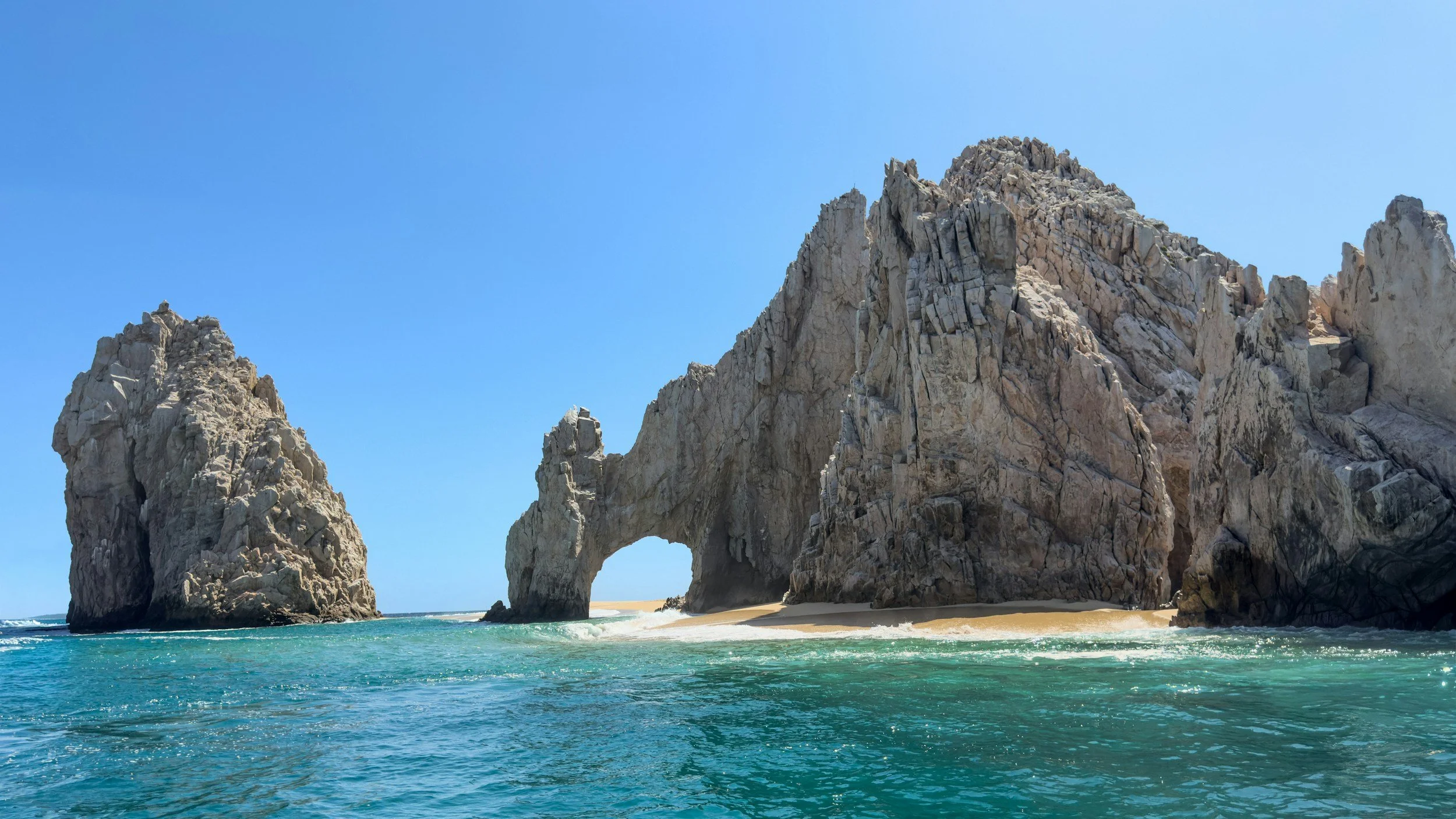
What I Told a Virtual Room Full of People Thinking About Moving to Mexico
A couple of months ago I was invited to give a keynote at the Escape Hatch event, hosted by Dr. Emad. It was one of those calls full of people at different stages of the same question - should I actually do this? Is Mexico right for me? What's really going to happen if I go?
I've had thousands of conversations with people at exactly that crossroads. And somewhere along the way I realised that every single relocation - every successful one and every failed one - follows the same pattern. Not the same logistics. The same psychological arc.
So that's what I talked about.
I called it the Hero's Journey of moving to Mexico. And I want to share it here, because I think it's the most honest framework I've ever used to explain why some people build a real life here and others go home wondering what went wrong.
You can watch the full keynote on YouTube — including the audience Q&A at the end.
Watch the Full Keynote ▶Why I Keep Coming Back to the Hero's Journey
The Hero's Journey is one of the oldest storytelling frameworks we have. Joseph Campbell spent his life documenting it across cultures, mythologies, and centuries — and the reason it keeps appearing everywhere is because it maps something true about human transformation. You leave what's familiar. You enter the unknown. You get tested. And if you don't retreat, you eventually become someone new.
When I first started helping people relocate, I didn't have language for what I was watching. I just knew that some people arrived and immediately started thriving, and others arrived and slowly fell apart — not because Mexico was wrong for them, but because they weren't prepared for what transformation actually feels like from the inside.
The Hero's Journey gave me the language. And once I started mapping real client experiences onto it, I couldn't unsee it.
The 10 Stages — And Where Most People Get Stuck
In the keynote I walked through ten stages of the relocation journey. I won't go through every one here, but the shape of it matters:
Most people who struggle in Mexico are stuck somewhere between Stage 6 and Stage 8. They haven't failed — they're just mid-journey. The problem is that mid-journey feels like failure when you don't have the map.

The Golden Calf — The Stage Nobody Talks About
I named it the Golden Calf because of the biblical story — the Israelites had escaped Egypt, they were on their way to the promised land, and in a moment of uncertainty they built an idol to worship instead of continuing forward. They chose comfort over transformation.
In Mexico, the Golden Calf looks like this: the beach. The cheap margaritas. The expat bar where everyone speaks English and complains about the same things. The Netflix binge. The WhatsApp group that becomes a full-time distraction. The beautiful sunset that lets you feel like you're living, without actually building anything.
I've watched people spend two years in Mexico and leave feeling like they wasted their time, when really they spent two years in the Golden Calf stage — waiting for Mexico to deliver a life to them rather than designing one for themselves.
This isn't a judgment. It's completely human. When you've made a big, scary move and things feel uncertain, your nervous system will reach for anything familiar and soothing. The Golden Calf is just what that looks like in a place with good weather and cheap food.
The question is: how long do you stay there?
Why So Many Canadians Don't Last
I get asked this a lot, and I want to be careful about how I answer it because it's not a character flaw — it's a cultural pattern.
Canadians, broadly speaking, are conditioned to trust systems. Healthcare is there when you need it. Infrastructure mostly works. The social contract is relatively intact. When things are hard, there's usually a process you can follow.
Mexico operates differently. Things move slowly. Bureaucracy can be opaque. Systems don't always work the way they're supposed to. And if your baseline expectation is that systems are reliable, every small failure here can feel like evidence that you made a mistake.
Americans, on average, are slightly more comfortable with navigating broken systems — because they already live in one in certain respects. That's not a compliment to the American system. It's just a different kind of resilience training.
What actually determines whether someone lasts has nothing to do with nationality. It comes down to whether they moved to Mexico as an escape plan or as a life design project. Those two things look identical at the airport. They produce completely different outcomes six months later.
The 3 Pillars That Turn Survival Into Thriving
By the time I get to this part of the talk, most rooms are nodding. The journey resonates. The Golden Calf resonates. What people want to know is: what do I actually do about it?
In my experience, the people who genuinely thrive in Mexico have three things in place. Without all three, something is always slightly off — even when life looks good on paper.
Routine
Your nervous system needs anchors. When everything around you is unfamiliar — the language, the bureaucracy, the social cues, the way things work — your internal environment needs to be predictable. A morning routine, a weekly rhythm, a physical practice, a consistent schedule. It doesn't have to be rigid. It just has to exist. The expats I watch struggle most are almost always the ones living entirely by feel, letting each day be improvised. The ones who thrive have structure — even loose structure — that gives their nervous system something to come home to.
Community
Not just people who look like you and speak your language. Real community — people you have something in common with beyond the fact that you both left your home country. That might be a sport, a cause, a neighbourhood, a church, a volunteer project, a business community. The expat bubble is real and it's comfortable, and it will also quietly hollow you out if it's the only connection you have. Mexico is an extraordinarily social culture. The people who tap into that — who learn enough Spanish to have real conversations, who make Mexican friends, who embed themselves in a neighbourhood — are almost always the people who stay.
Purpose
This is the one people underestimate most. You cannot live on beauty and low cost of living forever. You need something to wake up for — a project, a contribution, a problem you're solving, work you care about, a creative practice, something you're building. I've watched people arrive in Mexico with no plan beyond "I want to slow down and enjoy life" — and that's a beautiful intention — but without purpose, slowing down eventually becomes stagnation. The people who thrive long-term are the ones who brought their curiosity with them. The ones who found something in Mexico to care about.
The Questions From the Audience
After the talk Dr. Emad opened it up for questions, and two in particular stuck with me because they come up constantly in my consultations.
Do you have to commit to permanent residency to really live here?
No. You don't. There's a spectrum of commitment when it comes to Mexico residency — from spending part of the year here on a tourist visa, to temporary residency, to permanent residency over time. The right choice depends on your circumstances, your plans, your ties back home, and what you're trying to build. I always tell people: don't let the residency question be the reason you don't start. You can begin this journey without locking yourself into anything permanent. The residency conversation is one of the first things we work through in a consultation, and it looks different for everyone.
What do you do if you have an aging parent back home?
This one is one of the hardest tensions I see, and I want to honour how real it is. For many people — especially in their 50s and 60s — the pull toward Mexico is competing directly with the pull toward responsibility for a parent who may need them. There's no clean answer. What I will say is this: geography is more flexible than it feels in the planning stage. Many of my clients maintain a meaningful life in Mexico while remaining deeply present for their family back home — they just structure it intentionally, with clear travel patterns, good communication, and sometimes bringing family to visit. The question isn't "Mexico or my parent." It's "how do I design a life that holds both?"
What I Want You to Take From This
I didn't give that keynote to sell anything. I gave it because I believe that most of the people who struggle in Mexico struggle because no one was honest with them about what the journey actually involves.
Mexico is not a promised land. It won't fix a life that wasn't working before you left. It won't cure loneliness or anxiety or a marriage that was already in trouble. The sunshine is real, the cost of living is real, the warmth of the culture is real — and none of that is a substitute for doing the inner work of building a life here.
But for the people who come prepared — who understand the arc, who build the pillars, who treat this as a life design project — Mexico is genuinely extraordinary. I've watched people become more themselves here than they were anywhere else. I've watched people build community and purpose and health that they couldn't have imagined in the life they left.
If this resonates with where you are right now, the best next step is a conversation. Not a sales call — a real conversation about where you are, what you're trying to build, and whether Mexico is the right place to build it.
Ready to talk through your own journey?
Book a free discovery call with Dez. No pressure, no pitch — just an honest conversation about whether this is the right move for you, and what it would actually take to do it well.
BOOK A FREE DISCOVERY CALL GET THE FREE RELOCATION CHECKLISTmeet dez
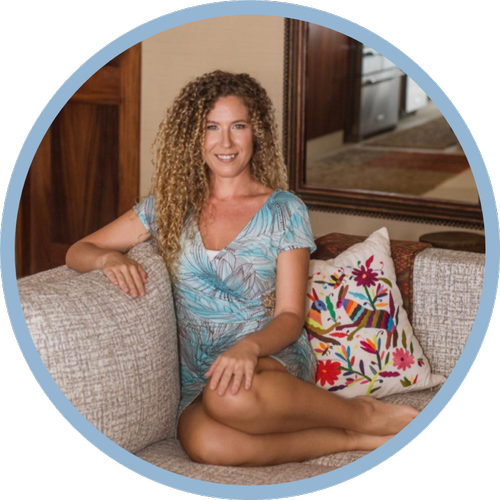
Dez, the founder of My Deztination
Mexico’s trusted relocation advisor. With over seven years living in Mexico, she knows the importance of trustworthy and professional guidance & support. She specializes in personalized consultations, private neighborhood tours, and full-service relocation packages to help clients move to Mexico the easy way.
GET $50 OFF YOUR RELOCATION PACKAGE
Book your Essentials or VIP package this month and receive $50 USD OFF—no matter where you're headed or why you're moving.
Use code: MOVETOMEXICO at checkout
This is your sign to move forward with peace of mind—and the right support.
BOOK YOUR RELOCATION CONSULTATION