

Traveling with pets to mexico
what expats need to know in 2026
Planning a move or even an extended stay—in Mexico doesn’t mean leaving your furry companions behind. In fact, moving to Mexico with pets is very doable when you’re prepared.
This updated guide covers the key things you need to know, whether you’re driving across the border or flying with pets from the U.S. or Canada.

Pet Travel Requirements for Mexico (2026 Update)
Here’s what’s currently required by SENASICA (Mexico’s National Service for Agro-Alimentary Public Health):
For Dogs and Cats:
Rabies vaccination certificate (administered at least 15–30 days prior)
Free of external parasites (fleas/ticks) upon arrival
Healthy appearance (no open wounds or visible skin infections)
NO Health Certificate required if traveling from the U.S. or Canada (land or air) but we still recommend it!
Note: For pets under 3 months old, rabies vaccination is not required.

Flying with Pets to Mexico
If you're flying in from the U.S. or Canada:
No health certificate is required, but you must present proof of rabies vaccination and your pet must appear clean and healthy.
Airlines have their own rules, so always check if they require additional documentation (especially if the pet is flying in cargo).
You may bring up to two pets per person; more than that requires an import permit and small fee (approx. $1,620 MXN).
Flying Tips:
Line your pet’s carrier with a pee pad and familiar blanket.
Freeze water in the bowl if traveling cargo—this prevents spillage.
Identify airport pet relief zones ahead of time.
Do not sedate your pet unless directed by your veterinarian.
Driving with Pets to Mexico (No Health Cert Needed)
As of 2019 (confirmed through 2026), Mexico does not require a health certificate when entering by land from the U.S. or Canada.
At the border:
Declare your pets at customs (“¿Algo que declarar?”)
You're allowed two pets per person. Additional pets may require a SENASICA fee (approx. $1,620 MXN).
SENASICA officials may perform a visual check for health and cleanliness.
If your pet is being treated for a skin condition or recent surgery, bring a vet’s letter on official letterhead with treatment details and vet license number.

Checklist: What to Pack for Pet Travel
Rabies certificate (with dates and vet info)
Proof of microchip (optional but recommended)
Medications + prescriptions
Collar, leash, ID tags
Travel carrier (soft or hard depending on airline)
Favorite toy or small blanket
Water bowl + collapsible food bowl
Treats + meal for pre-flight
Vet letter for ongoing treatments, if applicable
What to Expect Upon Arrival in Mexico
Upon arrival:
SENASICA agents may inspect pets at the airport or border
Pets must be clean, healthy, and parasite-free
Carrier must be clean (no toys, bedding, or food inside)
They will:
Disinfect carriers if needed
Remove non-compliant items (bedding, toys, etc.)
Deny entry if the pet appears sick or improperly documented
Note: Only cats and dogs are considered “pets.” Birds, reptiles, or exotic species require a CITES permit or special authorization.
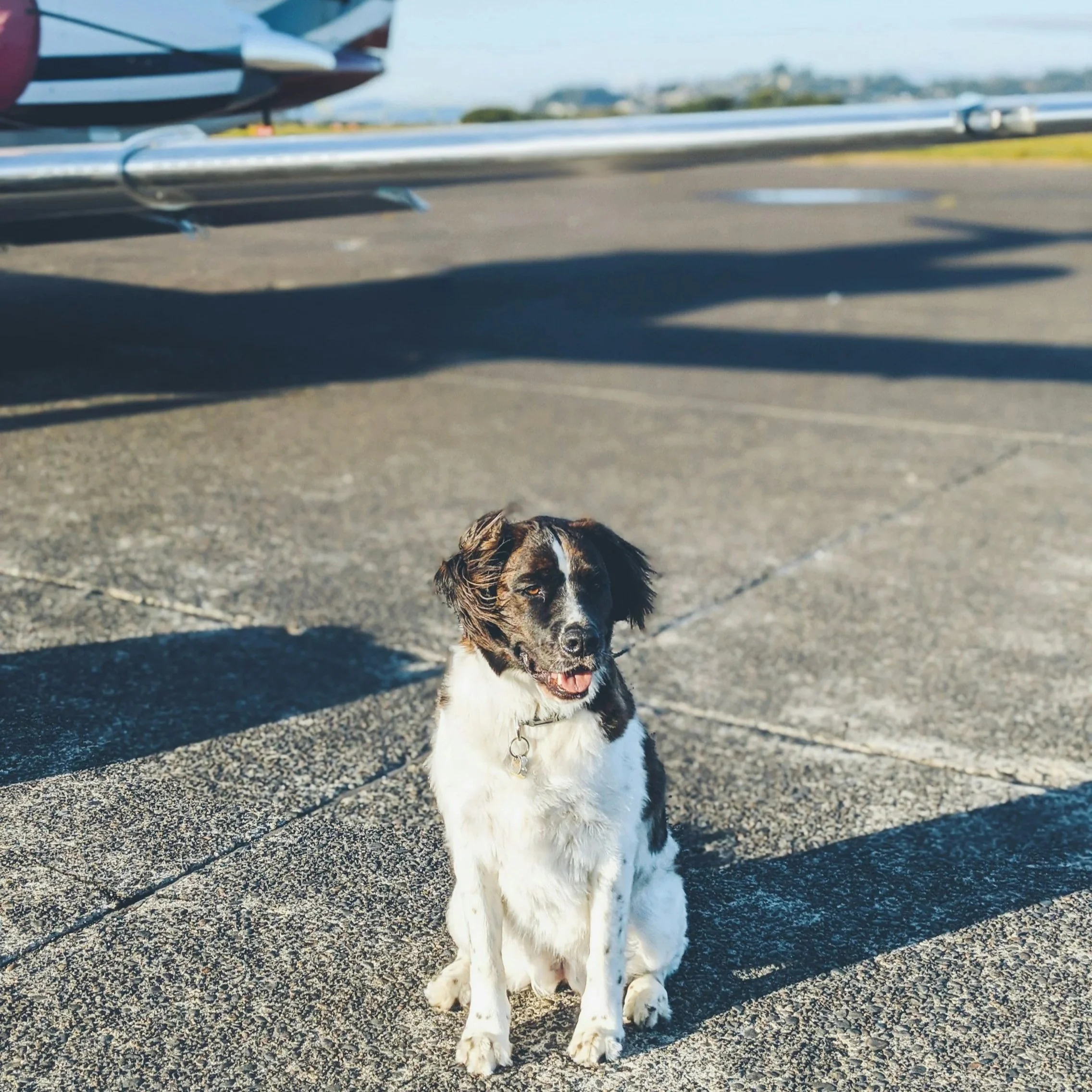
Heartworm & Flea Prevention in Mexico
Mexico is a heartworm-risk zone, especially in coastal and tropical areas.
Test your dog before arrival
Begin heartworm prevention 1 month before traveling
Continue monthly treatment year-round
Keep up with flea and tick preventatives—especially in humid climates
Veterinary Care in Mexico
You’ll find excellent, affordable veterinary care in major cities and expat hubs. My Deztination helps clients:
Connect with bilingual vets
Book appointments post-arrival
Understand local pet insurance options
Does my pet qualify to be a Service Animal?

Service Animal vs. ESA vs. Therapy Pet:
Only service animals are guaranteed:
Free flight (in-cabin)
No crate required
No hotel or rental pet deposits
To qualify:
You must have a disability recognized under the ADA (you don’t need to disclose it)
Your dog must be trained to perform a specific task (like medical alert, mobility support, etc.)
Airlines can only ask:
“Is this a service animal?”
“What task is it trained to perform?”
❌ Emotional support animals (ESAs) no longer qualify for free cabin travel (U.S. DOT rule since 2021). They must remain crated and travel as pets. Most airlines will charge.

✅ Service Animal Registry Tip:
NSAR (U.S.) or Service Dog Canada offer ID cards, vests, and legal summaries to help avoid issues.
Vests are not required—but they reduce hassle.
⚠️ Mexico does not recognize foreign-issued service animal status, but airlines do. If your service dog flies into Mexico with a valid U.S. or Canadian airline, it’s unlikely you’ll face issues during entry. However, Mexican businesses are not required to honor service status.

The NSAR/SDC will also give you an identification card for your service animal with their picture on the front (yes, it is as adorable as it sounds).
Printed on the back is a list of questions that businesses can and cannot ask, in case you ever run into someone who isn’t familiar with the laws. The only two questions you are allowed to be asked: Is this a service dog? What tasks does this service dog perform? Again, the answer is medical alert.
The service animal registry will save you money and stress when traveling with your pet, so look into it to see if you both qualify. Call the ADA, know your rights, and do the research. You and your beloved pet will be very glad you did.
Arrival at the Airport in Mexico
Once you land:
Pick up your pet at cargo (if not in-cabin)
Go to the SENASICA (OISA) office inside the airport
Bring:
Vaccination records (especially rabies)
Proof of flea/tick/parasite treatment
Valid health certificate if required by airline
SENASICA officials will:
Inspect your pet for illness or parasites
Check for wounds or skin infections
Disinfect your crate if it contains newspaper, shavings, food, or toys
✅ Mexico allows 2 pets per person duty-free. Bringing 3 or more requires a modest fee (around 1,620 MXN), payable online via SENASICA’s platform.
Bringing Pet Food into Mexico
Up to 50 lbs (22 kg) of sealed, branded dry food per family is allowed
Unbranded food (like Ziplocs) = 1-day ration only
Most major pet food brands are available in Mexico, though selection varies by city

Returning to the U.S. with Pets – 2025/2026 CDC Rules
As of August 1, 2024, these are the key requirements:
Your pet must:
Be over 6 months old
Have a microchip
Be up to date on rabies vaccination
Have a CDC Import Permit receipt (valid for 6 months, multiple entries)
✅ Mexico is not considered high-risk for rabies, making re-entry easier than from some countries.
Pet Travel FAQs
Do I need a health certificate to bring my pet to Mexico?
Mexico does not require a health certificate for pets entering by land from the U.S. or Canada. However, most airlines still require one for pets flying in cargo or internationally. Always check with your airline at least 30 days in advance.
What vaccines and documents do my pets need for Mexico?
Your pets must have an up-to-date rabies vaccine (administered at least 30 days prior), be free of ticks or parasites, and have a recent flea/tick prevention. Most airlines also require a health certificate dated within 10 days of travel. Microchips are recommended but not always required unless returning to the U.S.
Can I bring more than two pets into Mexico?
Yes, but only two pets per person may enter duty-free. If bringing more, you'll need to pay a small import fee (typically around 1,620 MXN) at the border or airport and visit a SENASICA inspection office (OISA).
What is SENASICA and why do I need to visit them?
SENASICA is Mexico’s agricultural and animal health authority. Upon arrival (especially via air), you'll take your pet to the SENASICA office inside the airport for a brief inspection to confirm vaccination records and visible health. They may disinfect your crate or remove items like bedding or food.
Can my service animal fly with me to Mexico?
Yes. Service animals are protected under ADA laws when flying with U.S. or Canadian airlines. They are allowed to fly in-cabin, out of kennel, free of charge. Emotional support and therapy animals no longer receive the same benefits. However, service animal status is not always recognized in Mexico once you land.
What are the rules for returning to the U.S. with pets in 2025/2026?
Per the CDC’s updated rules (August 2024), pets must be at least 6 months old, microchipped, and have a rabies vaccination. You’ll also need a CDC import form receipt valid for 6 months and multiple re-entries. Mexico is classified as low rabies risk, which simplifies reentry for most travelers.